What time is it?

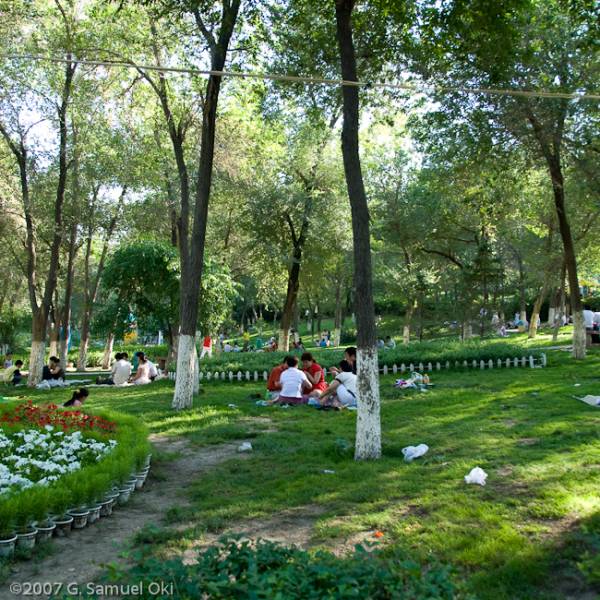
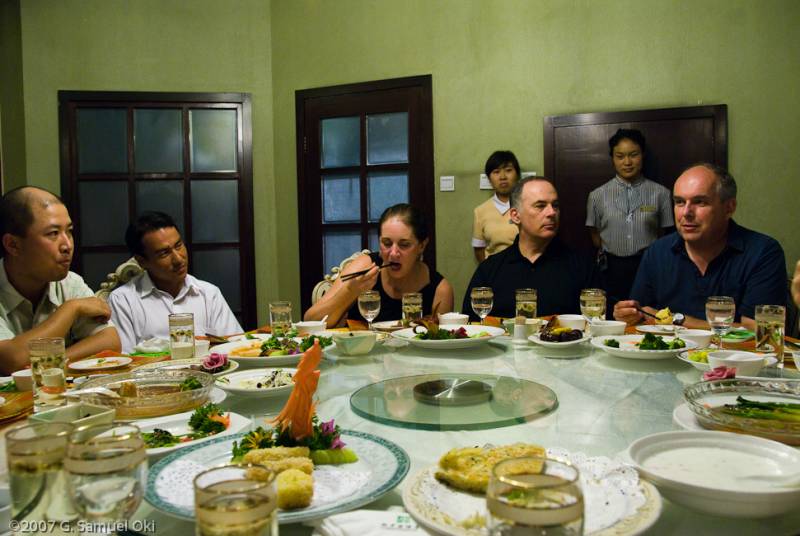
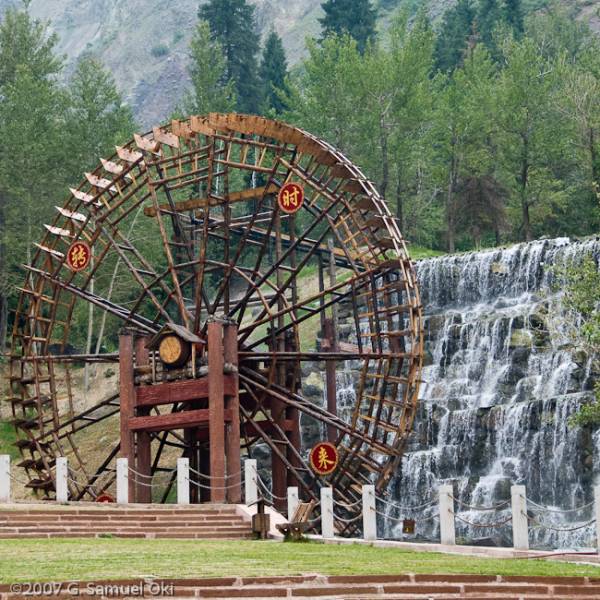
While looking at some of the pictures taken in Turpan, my friend asked, “What time of day were the pictures taken?” I replied, “Around mid-day.” I should have added, Beijing time. The next response was, “That’s odd. I wouldn’t have guessed that time because the shadows are long.”

So what’s up? Well in all of China there is only one official time zone, Beijing time, and there is no daylight savings time. In the Xinjiang Province the locals observe an “official” a two hour time shift to avoid getting up in the dark to go to work. But Urumqi and Kashgar are located so far west of Beijing that from a practical matter they are essentially three hours behind Beijing. And, that is why the shadows are long. Noon Beijing time is nine a.m. based on sunrise in western Xinjiang.

Sam’s Journal- Day 15 Urumqi

Jul 24. Our group is back on the bus to visit Heavenly Lake. I have to admit that we in California are spoiled when it comes to mountain scenery. Here in western China, Heaven Lake must appear to be just that- heavenly, when one considers the arid gobi and desert that lay adjacent. We take a brief boat ride on the lake, partake in lunch, and then head back. We make a stop over at a Kazakh Yurt Camp that is set up for us tourist.

In 1983, a then younger me (Sam Oki) was working in the family agricultural business. Another young man, Ansheng Huang, from China (PRC) had made his way to the United States by way of a Chinese agricultural exchange program. This newly formed organization had initiated ties with a similar, but long-standing Japanese program. My family’s company had hosted many students through the Japanese program. Ansheng found his way via this connection to Sacramento and worked at the family nursery for six months. He and I had kept in touch over the years with letters and then e-mail; Urumqi is his home town.

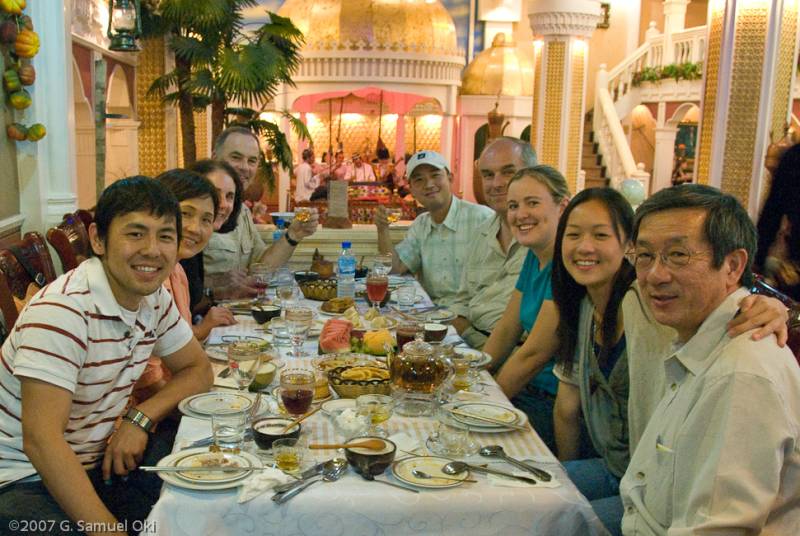
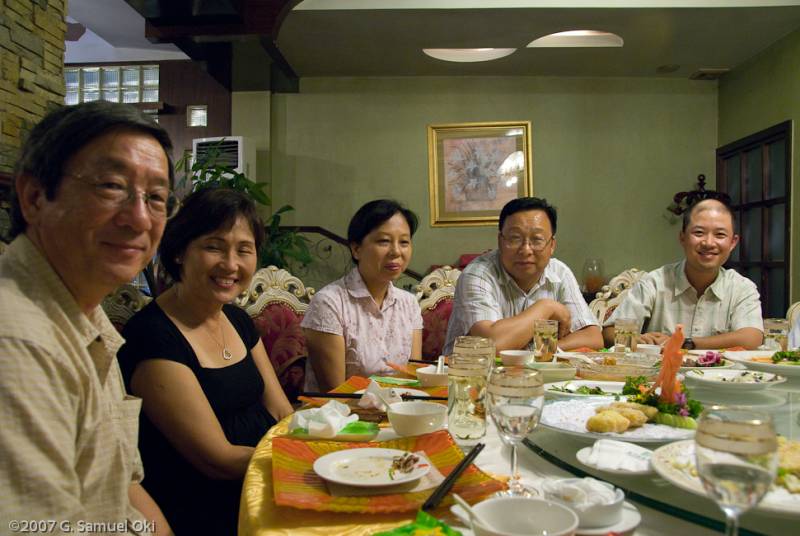
After Ansheng left the U.S., I hadn’t seen him until 2003 when I made my first visit to China. He and his wife flew out from Urumqi and briefly met in Xian. On this trip, arrangements were made to meet up with he, his wife, and our group for coffee on our first night in Urumqi and dinner on the second night. Over dinner, we shared the story of how we became friends with the rest of the group. I must truely say that I didn’t realize how much of an influence six months in the U.S. had on Ansheng’s life. And, for me it is a gift that those six months created a lasting connection over the last twenty-four years.

Sam’s Journal- Day 14 Urumqi

Jul 23. We have an uneventful flight from Kashgar to return to Urumqi and check into the newly built Sheraton Hotel. A mind-boogling modern hotel in the hinterlands of China with some of the best rooms we’ve had on the trip.

Sam's Journal- Day 10 Urumqi

Jul 21.
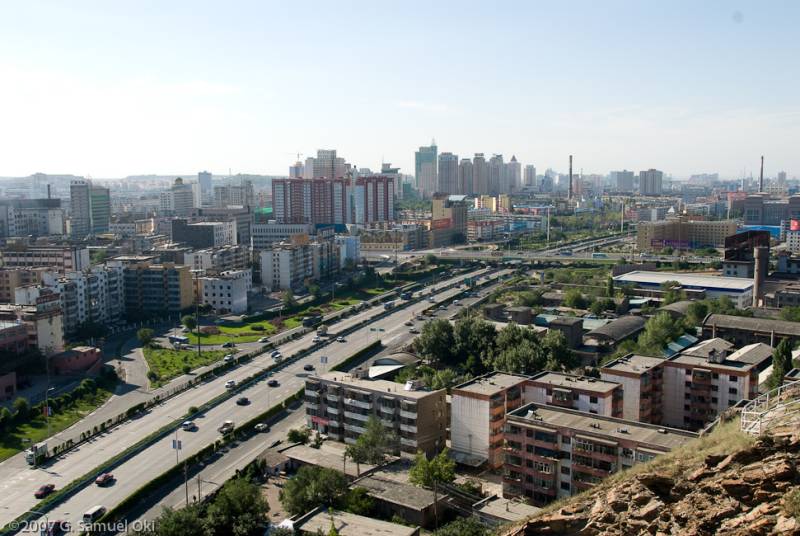
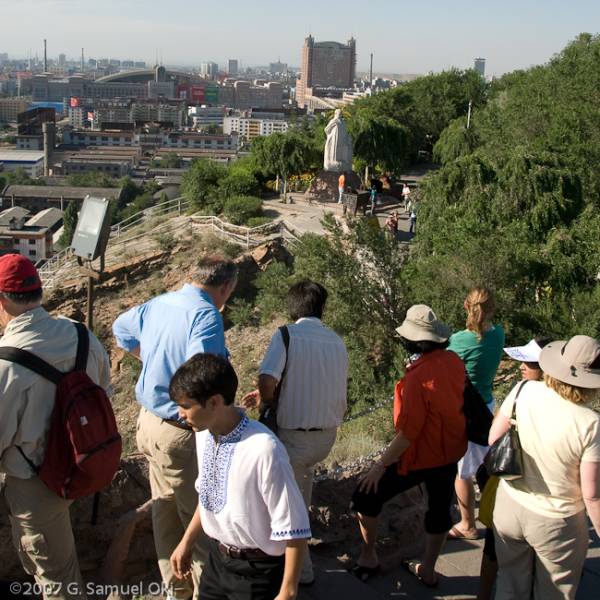
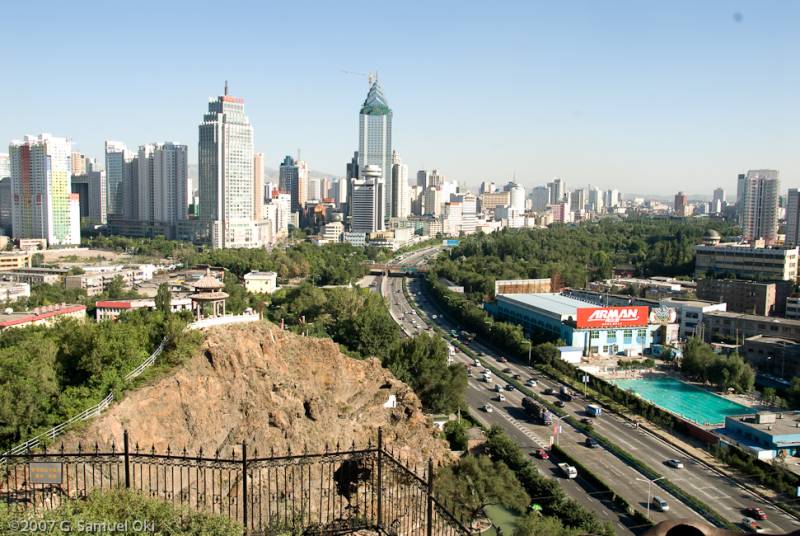
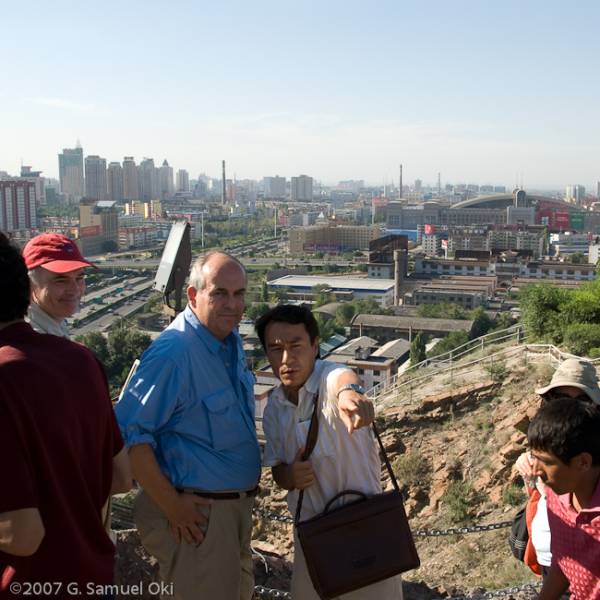
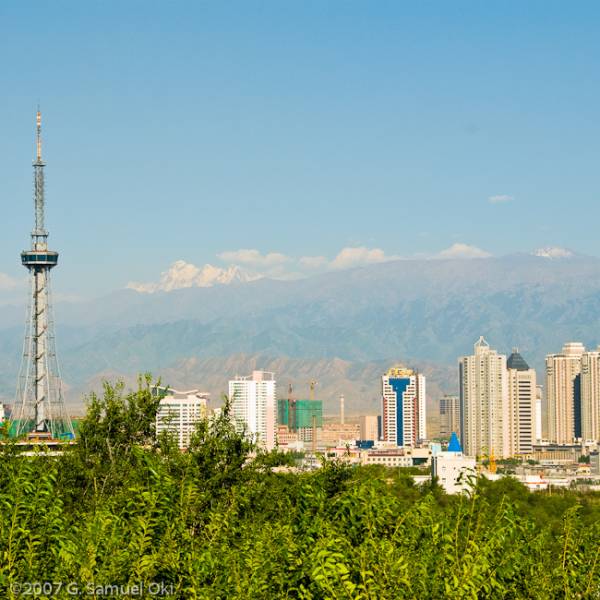
We depart Turpan the following morning heading to Urumqi by bus and then on to Kashgar that evening via airplane. But first, we visit the Xinjiang Provincial Museum and then Red Hill, where we get a panoramic view of Urumqi. The museum has displays that depict all the different ethinic groups in the Xinjiang Territory. You might have seen the special television presentation on Nova of the “Mysterious Mummies of China.” The mummies that are the subject of this program are on display here. The mummies at first were thought to be of Asiatic or Middle Eastern ethnic origin but DNA samples proved that the mummies were of caucasian origin. The history of the mummies really bring home what a center of trade this region was, how long ago these trade routes had been established, and how much more closely related we all are.